

500 supermarket vouchers, 300 meter top-ups and debt rebates of up to £1,000: how South Cambs will spend £180,000, and where to get help before it opens.
South Cambridgeshire District Council will spend £180,000 on help for low-income households this year. The money pays for supermarket vouchers, energy meter top-ups, baby boxes and payments towards debts of up to £1,000 a household.
The council’s Cabinet agreed the plan on Tuesday 29 September, the council said the same day. None of it is open to applications yet. The council says eligibility and how to apply “will be confirmed soon”.
The press release lists the types of help. The report to Cabinet goes further. It gives how much goes to each project, how many people each one can reach, and who will be eligible.
Where the money comes from
The money is from the government’s new Crisis and Resilience Fund. It replaced the Household Support Fund in 2026 and runs to March 2029, according to the report.
- Cambridgeshire County Council receives £5.3 million a year from the fund.
- The county set aside £1 million of the first year’s money for the county’s district councils.
- South Cambridgeshire’s share is £180,000 for 2026/27.
- Funding for the second and third years “has not yet been confirmed”.
What the £180,000 pays for
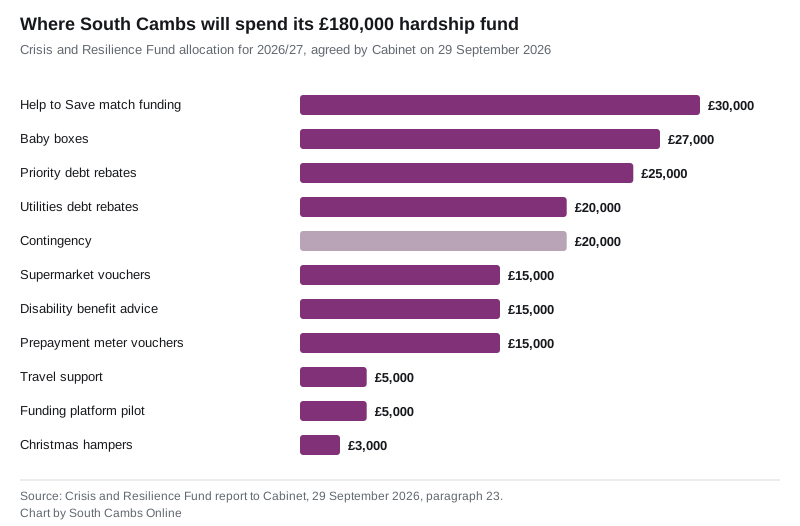
The report sets out each project, with its budget and how many households it can reach:
| Project | Budget | What it buys | Who gets it |
|---|---|---|---|
| Help to Save match funding | £30,000 | Up to £150 each into a Help to Save account for 200 residents | Universal Credit claimants, referred first by the council’s income maximisation service |
| Baby boxes | £27,000 | About 180 boxes of essentials for newborns, at £150 each | At first, households on Council Tax Support with a baby under six months |
| Priority debt rebates | £25,000 | Up to £1,000 each for 25 households, towards rent, council tax, energy, water, phone or internet arrears | Households who attend an income maximisation appointment |
| Utilities debt rebates | £20,000 | Up to £1,000 each for 20 households in energy or water arrears | Households having a debt deducted from Universal Credit, contacted by the council |
| Supermarket vouchers | £15,000 | 500 vouchers worth £30 each | Given at officers’ discretion to households in crisis |
| Disability benefit advice | £15,000 | About 150 three-hour appointments for help claiming PIP or Attendance Allowance | Households the council identifies as likely to qualify |
| Prepayment meter vouchers | £15,000 | About 300 vouchers worth £49 each | Given at officers’ discretion, to stop households being cut off this winter |
| Travel support | £5,000 | Up to 100 vouchers of up to £50 for buses, trains and community transport | Referrals from partner organisations |
| Funding platform | £5,000 | A one-year software pilot to run the vouchers and show residents what they can claim | |
| Christmas hampers | £3,000 | About 60 hampers at £50 each | Referrals, open to anyone regardless of religion |
| Contingency | £20,000 | Extra money for any project that runs short |
A few details are worth knowing.
- The debt rebates come with conditions. A household must attend an appointment where an adviser goes through its income and spending. The council only pays if a rebate suits the household’s circumstances.
- Help to Save is a government savings account. People on Universal Credit get a 50p bonus for every £1 they save, up to £50 a month. The council’s extra £150 is meant to start the saving.
- The meter vouchers fill a gap. The report says many prepayment voucher schemes ended in 2025, leaving some residents who could not top up cut off from their gas or electricity.
- Most of the help is targeted, not applied for. Several projects reach people through the Low-Income Family Tracker, which the report uses to identify households likely to be eligible. Others work by referral or at officers’ discretion.
The Cabinet also agreed that the lead member for healthy communities, Cllr Dr Lisa Redrup, can set the detailed rules and move money between projects.
What the council decided not to fund
The report weighed four other ideas and turned them down.
- Debt charity funding. The council already pays Citizens Advice through an existing grant.
- Slow cookers and air fryers. These were handed out in earlier years, and the report says those in greatest need have already been offered one.
- Energy efficiency packs. Existing schemes such as the Local Energy Advice Partnership already cover this.
- Grants to food banks. The county council plans its own food grant for local organisations.
School holiday vouchers have ended
The report’s case for the food bank idea contains a line many families will want to know. The school holiday supermarket vouchers for households claiming free school meals ended at the start of the 2026/27 school year.
The county council confirms it on its holiday voucher page: “The Cambridgeshire Holiday Voucher Scheme has now ended.” So there are no vouchers for October half-term. The county says families who used to get them “may be prioritised” for help from the new fund. It also points families to the free Holiday Activities and Food programme, which offers activities and meals in the school holidays.
Where to get help now
The district schemes are not open yet, but the fund already has two county routes, according to Cambridgeshire County Council’s Crisis and Resilience Fund page:
- Help with essentials is through Citizens Advice for Cambridge and South Cambridgeshire, which covers South Cambridgeshire. Its freephone adviceline is 0808 278 7808, Monday to Friday, 9am to 4pm.
- Help with heating oil costs is through the Cambridgeshire Community Foundation.
Citizens Advice sets out what it asks for. Applicants need bank statements for all their accounts for the last three months, plus their latest Universal Credit statement or payslip. Awards are one-off vouchers, not cash or bank transfers, and not everyone who applies will get one.
The district council’s own money advice page has a benefits calculator and a form to book an appointment with its advisers. The district’s food banks and food hubs are mostly open to anyone on the day, without a voucher.
What it means for you
- If you are struggling now, do not wait for the district schemes. Contact Citizens Advice on 0808 278 7808, or book an appointment through the district council’s money advice page.
- If you are on a prepayment meter and cannot top up this winter, the council’s advisers will be able to give £49 vouchers once the scheme starts.
- If you have a new baby and get Council Tax Support, you are likely to be in the first group offered a baby box.
- If your child gets free school meals, there are no holiday vouchers this October half-term. Look at the Holiday Activities and Food programme instead.
- If you rent or pay council tax and are behind, the priority debt rebate could pay up to £1,000, but only after a full money advice appointment.
We will update this story when the council publishes who can apply and how. Our council tax bands page has this year’s bills for every parish.
Have your say