
Cabinet votes on 29 September to consult on piping waste heat from an 8MW data centre near Flint Cross into Melbourn homes. The costs and the catches.
A small data centre outside Melbourn would pipe its waste heat under the village’s streets to warm homes, schools and the swimming pool. South Cambridgeshire District Council’s Cabinet decides on Tuesday 29 September whether to open a public consultation on the plan.
The scheme is called the Melbourn Energy Superloop. It is run by Dataglow Energy, which is backed by Octopus Energy Generation. Council officers say it is “one of the first projects of its type in the UK”. (Cabinet report, Proposed Melbourn Local Development Order)
Melbourn has about 2,300 households, according to the report. Nobody would have to connect.
What is being proposed
There are two linked parts, and they go through two different routes.
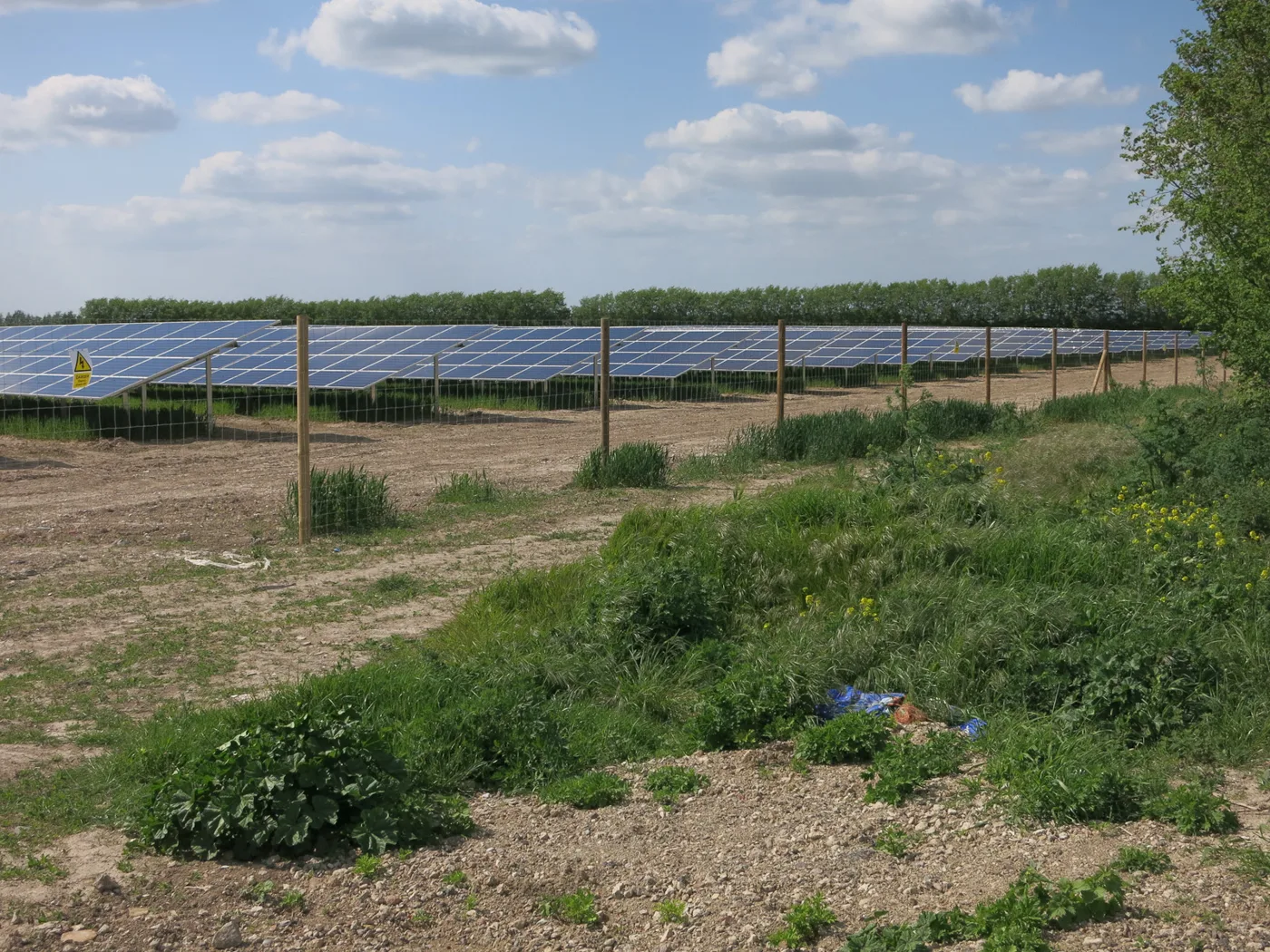
The data centre. A single-storey building of 50m by 30m, rated at 8MW, on a 4-acre site next to the existing solar farm “down the byway past Norbury’s Building Supplies”. (Superloop planning page) The developer’s briefing to councillors places it at Hall Farm, south of Flint Cross. Flint Cross is the A505 crossroads just under two miles south-east of the village centre. (Dataglow briefing to the Planning Committee, August 2026) This goes through a normal planning application, reference 26/03387/FUL. The Cabinet report says it was still being validated when the report was written. A decision is “provisionally scheduled” for the Planning Committee in December 2026.
The heat network. Pipes under the roads would carry water warmed by the servers. Homes that sign up get a Kensa ground source heat pump, which draws heat from that water. The cooled water goes back to the data centre to be warmed again.
The council wants to grant planning permission for the whole network in one go, using a Local Development Order. Without it, the pipework and connections would need “numerous planning applications”, the report says.
The order, as described in the briefing, would:
- cover underground pipework, boreholes, roadside kiosks and associated works
- limit kiosks to 1.4m high and 2.5 cubic metres
- exclude the conservation area, the grounds of listed buildings and other sensitive areas
- expire after 15 years
- require management plans for trees, construction and ecology
The briefing does not say how homes inside the conservation area would connect.
What it would cost a household
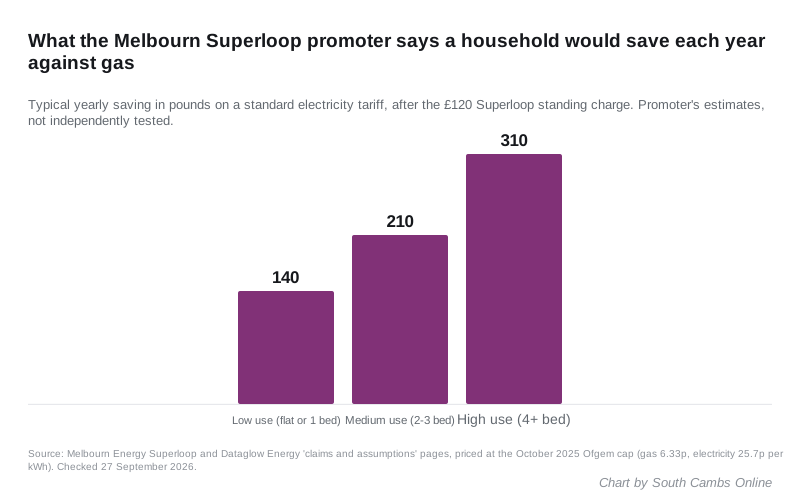
The Cabinet report says, citing Dataglow, that “no charge will be made to users for the ambient temperature water”. The project’s own website adds a detail the report does not. There is a £120 a year standing charge to be connected, rising each year with CPI inflation. (Superloop home page)
The promoter’s estimates of yearly savings against a gas boiler are:
| Home | Estimated gas bill | Saving, standard tariff | Saving, smart tariff |
|---|---|---|---|
| Flat or 1 bed, 1-2 people | about £600 | about £140 | about £210 |
| 2-3 bed, 2-3 people | about £850 | about £210 | about £320 |
| 4+ bed, 4-5 people | about £1,200 | about £310 | about £470 |
Those figures come from Dataglow’s claims and assumptions page. They assume the gas supply is capped and the heat pump reaches a seasonal efficiency of 500%. They are priced at the October 2025 Ofgem cap: gas at 6.33p and electricity at 25.7p a kWh. So they are almost a year old, and they have not been tested independently.
The installation itself is not free. According to the project’s FAQ:
- the government’s Boiler Upgrade Scheme grant, £7,500 when replacing gas or £9,000 when replacing oil or LPG, comes off the quote, and the installer applies for it
- the quote covers the heat pump, a hot water cylinder, controls, a standard number of radiator upgrades and removal of the old system
- trenching from the road to the house is covered for up to 14m; longer or more complex runs may need a contribution
- extra radiators or pipework found at the survey add to the price
The FAQ does not publish a typical price. It says example homes will be shown once the first surveys are done. Those grant values match the government’s Boiler Upgrade Scheme categories now in force.
The same trenches would carry fibre broadband of up to 10Gb, which is optional.
The site and the environmental case
Dataglow’s briefing sets out its own assessment of the site. Among the points:
- the nearest home is 450m away
- the land is Grade 3a farmland
- water use is predicted to be “similar to 2-4 dwellings”, because the water loop is closed
- about 30% of the power would come directly from the sun, the rest from the grid
- at least 80% of the heat would be reused
- the construction route avoids residential areas
- there is asbestos in the byway “from Eternit”, to be dealt with by encapsulation or horizontal drilling
For scale, officers compare it with typical hyperscale data centres of 40MW or more. This one would be about a fifth of that size.
Dataglow says it “will not be building a data centre without a heat network”. If the data centre is approved, the council report says a Section 106 legal agreement would tie its construction to delivery of the network.
The timetable
| When | What happens |
|---|---|
| Tuesday 29 September 2026 | Cabinet decides whether to start consultation on the order |
| After Cabinet | 28-day consultation on the order, alongside the data centre application |
| October 2026 | Home surveys begin in the south of the village, nearest the data centre |
| December 2026 | Data centre application provisionally due at Planning Committee |
| February 2027 | Order back to Cabinet for adoption, after representations |
| Q2 2027 to Q3 2028 | Phased construction of the data centre and heat network |
The dates come from the Cabinet report, the Dataglow briefing and the Superloop site. The full Cabinet agenda is on the council’s committee site.
What it means for you
If you live in Melbourn, watch for site notices. The council report says residents will be told about the consultation “through site notices”. It says writing to every household “would not be practical or proportionate”. So you may not get a letter.
If you are interested in connecting, registering does not commit you, and nor does a home survey, according to the FAQ. Surveys start in the south of the village first. Street-by-street routes will be settled “once we have a complete picture of resident demand”.
If you rent, the FAQ says you will need to speak to your landlord.
If you want to object or support, the data centre and the order are separate consultations. Comments on the data centre go on the planning application once it is live on the Greater Cambridge planning portal. Our South Cambs planning news page explains how to find and comment on one.
Treat the savings figures as the promoter’s. The project says 94% of residents it has spoken to are interested in joining. That is its own figure from its own events. The real test is the quotes that follow the first surveys, and the formal consultation, which has not yet opened.
Have your say